Procurement Signals That Distinguish Architectural Output Isolation From Contractual Output Confidentiality
Procurement teams must verify architectural isolation, not just vendor confidentiality promises.
Zero-trust AI architecture for enterprise requires verifiable boundaries. Architectural output isolation blocks cross-tenant leakage through physical or hardware-enforced controls, while contractual output confidentiality prohibits disclosure without removing the technical path. Procurement must also test vendor access separately, because preventing another tenant from seeing an output does not establish that the provider cannot see the underlying prompts and data.
Why procurement teams can no longer rely on a vendor's privacy language alone
Vendors use “private,” “confidential,” and “isolated” to describe products with different protections. One may separate customer workloads at the infrastructure layer, while another shares infrastructure under a confidentiality agreement. The words do not reveal the boundary. A buyer comparing those claims could therefore mistake an obligation not to disclose information for a system that prevents disclosure.
That ambiguity now reaches beyond engineering teams. AI spending has become a budgeted, governed workload, bringing finance, legal, and security into the decision before a vendor is selected. Each function needs evidence it can evaluate. Legal language says what the vendor must do, but architecture shows whether a technical path for disclosure is still open.
What the two protection models actually are and how they differ structurally
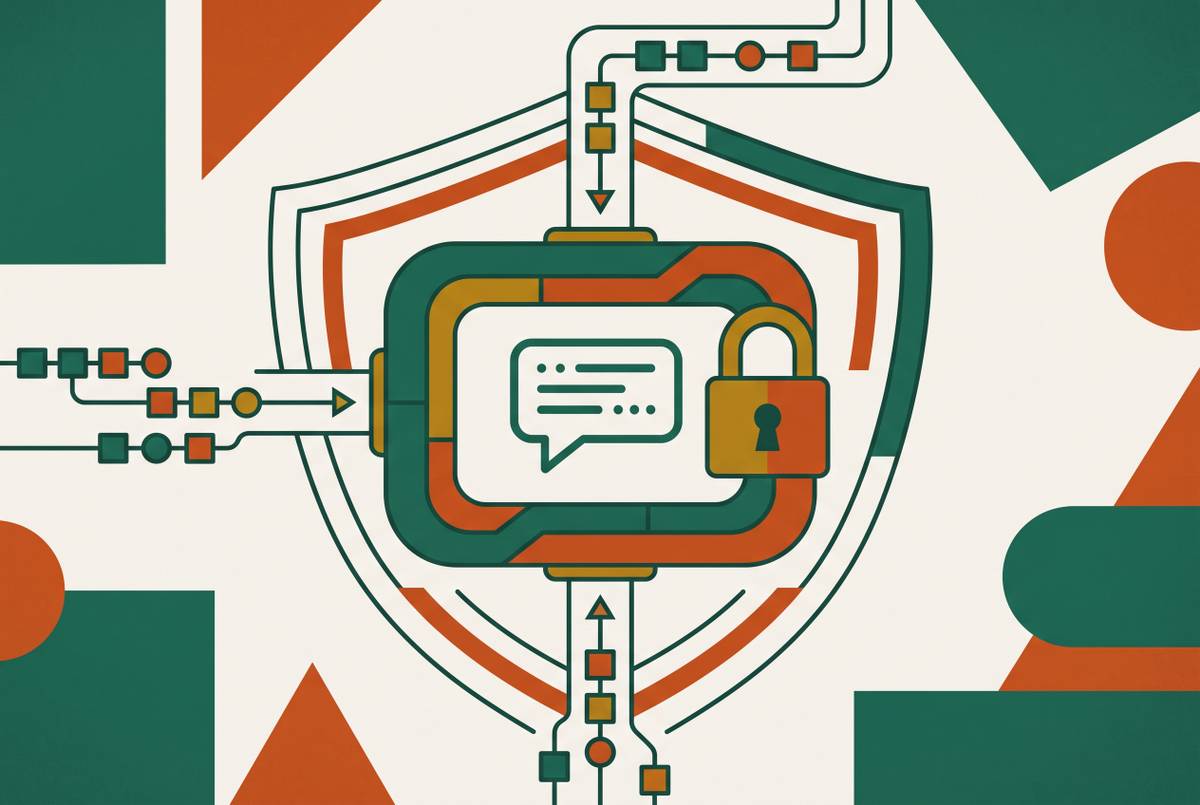
Architectural output isolation uses physical or hardware-enforced boundaries to make cross-tenant output leakage structurally impossible within the protected workload. Its defining claim is that the boundary holds even when application code is wrong, a prompt injection succeeds, or an insider queries the system. Contractual output confidentiality instead uses legal obligations to prohibit sharing or reusing outputs. Its protection rests on compliance with that promise. If a breach occurs, the contract supplies legal recourse.
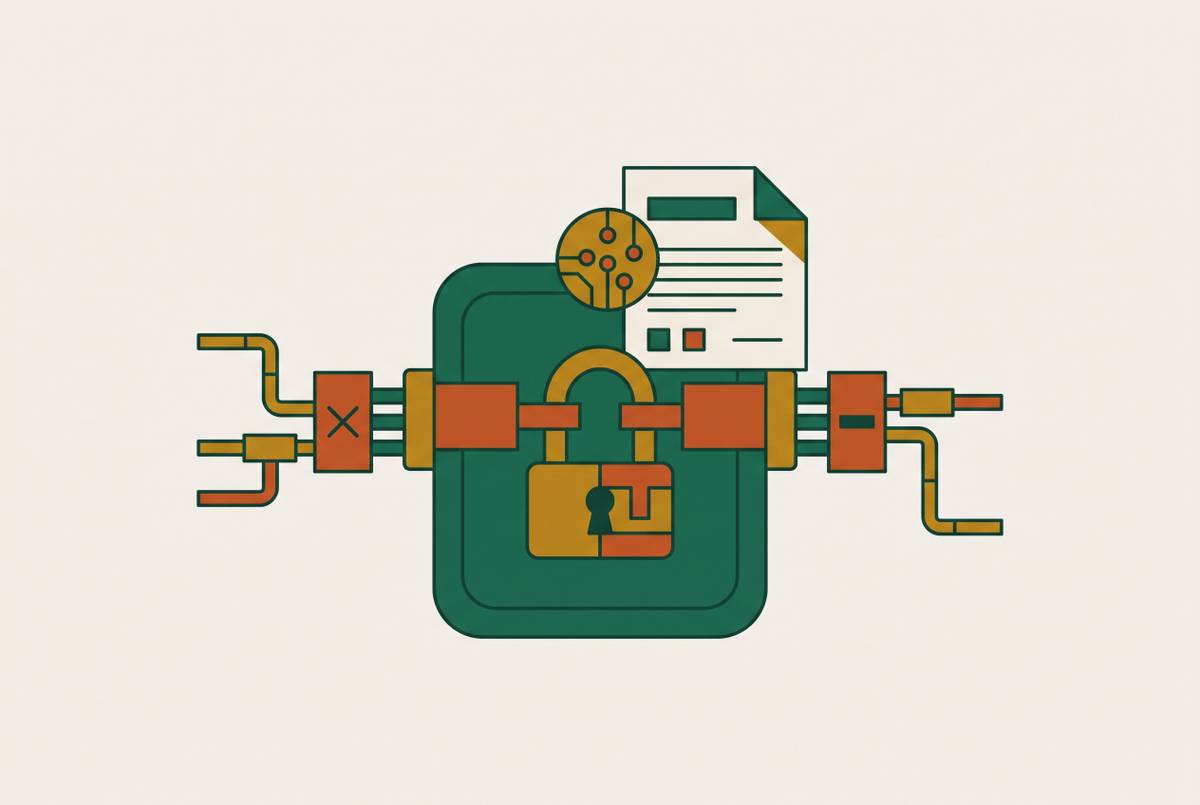
These are different protection models. Contractual confidentiality can leave leakage paths through shared inference infrastructure, training absorption, and subprocessor routing untouched. Architectural isolation costs money and is harder to run, and misconfiguration can weaken the protection the vendor claims. A TEE-capable server is not necessarily running a confidential workload. Vendors should therefore be assessed on which failure modes the implemented boundary excludes.
Where leakage actually happens in AI systems — the layers legacy audit frameworks miss
AI systems can leak information through more than stored records. Shared prompt caches and KV-caches can create timing side-channels through which a malicious tenant reconstructs another tenant’s prompts. Fine-tuning on aggregated customer data can also cause a model to memorize tenant-specific phrasing and reproduce it for another customer. Neither path requires a deliberate disclosure. Both arise from how information is processed or retained.
Retrieval introduces another boundary to examine. In multi-tenant RAG pipelines, links between entities in different tenants’ data can lead to cross-tenant results even when queries are benign. Ingesting everything into one index, attaching a tenant_id, and asking the model to respect permissions does not provide deterministic access control. Models are susceptible to prompt injection. Permissions must therefore be enforced outside the model’s reading of instructions.
Subprocessor routing can carry the same risk beyond the vendor. A product may send customer data to a foundation model provider as part of how it normally works. If that provider retains the data for training, information can enter a model used by applications outside the customer’s contractual relationship. A review that looks only at the primary vendor misses that downstream path.
The three architectural patterns vendors use and what each actually guarantees
The silo pattern gives each tenant a dedicated vector database index, runtime, and API endpoint. It allows per-tenant encryption keys and lifecycle policies, and dropping an index gives the tenant a clean way to delete its indexed data. AWS’s isolated VPC model provides one reference implementation. The separation has a cost. Vector databases need a lot of memory because HNSW graphs must stay in RAM, and more tenants need more dedicated infrastructure.
The pool pattern instead places multiple tenants in one index, using namespaces and filters enforced by signed tokens. Onboarding is inexpensive and fast, but isolation depends on correct enforcement for every query. A missing tenant-ID filter can expose other tenants’ data. There is no hardware backstop. Filtering must be deterministic at the database layer.
The bridge pattern allocates pooled infrastructure to low-risk tenants and silos to high-risk tenants. Its guarantee depends on the assigned tier. A buyer therefore needs written confirmation of the workload’s placement and the escalation path if its risk classification changes.
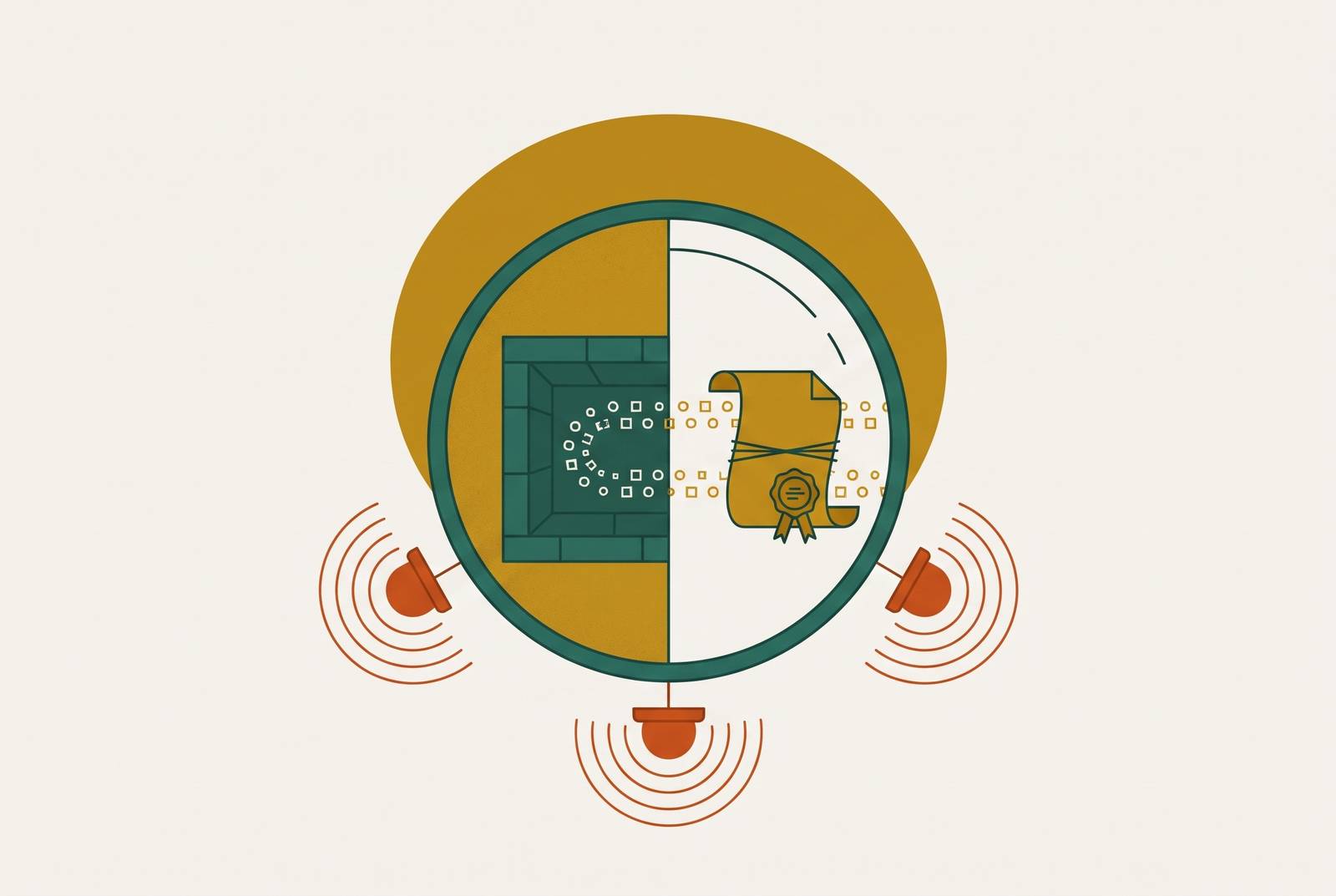
Confidential computing offers another path that hardware enforces, with workloads running inside a Trusted Execution Environment, or TEE. Remote attestation must precede release of model decryption keys. The attestation result supplies the evidence. The full confidential stack must be implemented and attested, including the CPU TEE, confidential GPU where applicable, confidential containers, and key broker service.
Why contractual confidentiality clauses, as typically drafted, cannot substitute for architecture
Traditional confidentiality clauses address disclosure to third parties. They do not necessarily address absorption into model weights, even though a model can reuse information without disclosing it in the conventional sense. A contract may assign both to the customer while remaining silent about derived embeddings and RAG index artifacts.
Training terms require equally careful reading. Most major enterprise-tier agreements now default to no training, while consumer and lower-tier terms may permit it unless the customer opts out. Sensitive workloads need an affirmative prohibition covering the vendor and its subprocessors. An opt-out process is not an equivalent commitment. Nor does a prohibition establish that it is being followed.
That is where verification rights become essential. Without an audit mechanism, a buyer may have only the vendor’s self-reporting, and a clause binding the primary vendor may leave downstream providers ungoverned. Strong contracts define obligations across that chain.
Observable signals in RFP responses that distinguish architecture from contract promises
“How is customer data isolated in multi-tenant environments?” should elicit a named pattern, enforcement layer, and process for detecting and remediating exposure. A dedicated index, database namespace, or hardware TEE describes a mechanism. A reference to “strict policies” does not. An answer that puts access control in the system prompt shows the model-layer weakness described earlier.
“Can inputs, outputs, or derived artifacts train or improve any model, including a subprocessor’s model?” tests the absorption gap. A credible response commits to an affirmative prohibition across that scope. An opt-out reference leaves work for the customer. A prohibition confined to the vendor’s own models leaves unanswered whether subprocessors can use the data to train or improve their models.
“Which subprocessors receive data, where are they located, and what binds them?” tests the routing gap. A complete answer identifies foundation model, hosting, and analytics providers, plus any human review team, and specifies jurisdictions and equivalent obligations. Missing names prevent evaluation of the chain. A promise to disclose them after signing leaves the buyer unable to evaluate the chain before committing.
“What mechanism verifies isolation and training restrictions?” should produce evidence appropriate to the claim. Remote attestation reports and an independent SOC 2 Type II audit whose scope covers tenancy isolation are more concrete than internal assurances. Their scopes still need scrutiny. Proof that one control works does not by itself back up every privacy claim.
“Can the vendor provide per-inference audit logs?” tests observability. Relevant records include prompt, context, retrieval sources, model version, and output. The regulatory distinction is important here. DORA places logging and contractual audit-access obligations on covered financial entities, rather than directly imposing those per-inference fields on AI providers, while EU AI Act Article 12 addresses logging for high-risk AI systems.
What to look for in architecture diagrams and contract exhibits before signing
An architecture diagram should show where the tenant boundary is. An application filter provides logical isolation. Shared components need explicit labels. A shared embedding model, vector index, or cache warrants examination, as does every arrow carrying customer data to a third party. A box marked “TEE” requires the confidential stack and attestation flow to support its claim.
Contract exhibits should then bind the vendor to the promised treatment of data. Training prohibitions must cover inputs, outputs, embeddings, and other derived artifacts across subprocessors, while ownership provisions must assign rights over embeddings and RAG index artifacts. Changes need commitments too. These include advance subprocessor notice with a right to object, a minimum model-version change notice period, and certification of deletion covering backups and training copies as well as production data.
The documents should agree before signing. A diagram may depict protection that the agreement never commits the vendor to maintain, while an agreement may promise isolation that the diagram does not explain. Written clarification must resolve that mismatch. Finally, verification rights need an executable mechanism, with tenancy isolation named in the audit scope rather than buried beneath a general compliance assurance.
How to assess vendors who make privacy a first-class architectural property
A privacy-by-architecture claim should face the same checks as any other claim. The vendor should walk through each component, identify whether it is shared or dedicated, locate the enforcement boundary, and explain the attestation mechanism. Precision is the useful signal. Protection must survive the relevant application failure.
For buyers asking how to prevent a vendor from seeing internal prompts and data, cross-tenant isolation alone is an incomplete answer. A dedicated index addresses separation between customers but does not, by itself, establish provider inaccessibility. Buyers should examine the attested workload, confidential stack, and key-release flow rather than infer vendor exclusion from the word “isolated.”
The standard agreement provides another test of that positioning. Does it already include explicit training restrictions, embedding ownership, subprocessor change notification, and audit rights, or are those available only through negotiation? The architecture, attestation evidence, and binding exhibit must all back up the same claim.
The strongest objection to demanding architectural isolation and when it holds
Dedicated infrastructure can be wasteful when tenant indexes sit idle. A well-designed pool with fine-grained access control and namespaces enforced by signed tokens can serve many workloads without the expense of separate runtimes and indexes. That objection deserves a fair hearing. For PII-free, low-risk data with a genuinely tolerable cross-tenant exposure cost, verified logical isolation and strong contractual controls can be defensible.
Early deployments with unsettled regulatory classifications also face a real cost decision. But uncertainty is not evidence of low consequence. The pool’s guarantee still depends on correct query enforcement, and a missing filter can fail silently without a hardware boundary to stop it. Adding an LLM does not turn logical partitioning into architectural isolation.
The decision therefore turns on workload classification. Deterministic database filtering is necessary for a pooled design, but it does not address every shared-cache, training, or subprocessor path by itself. Buyers should match the architecture to data sensitivity and exposure consequences. Vendor defaults are not a substitute for that assessment.
A procurement decision sequence that applies these signals before a contract is signed
Procurement should begin by classifying the workload before contacting vendors. The isolation needed depends on how sensitive the data is, which rules apply, and what would happen if data were exposed across tenants. High-consequence workloads need architectural isolation as a gate criterion. Defining that requirement first avoids negotiating legal remedies for a risk that should have been blocked technically.
The RFP should then require answers on isolation enforcement, training restrictions, subprocessors, verification, and inference logs. Responses should be scored for mechanisms. For a high-consequence workload, obligations alone are disqualifying. The architecture review follows, checking enforcement points, shared components, external data flows, and the full confidential stack wherever claimed.
Before signing, the contract review should reconcile those representations with the exhibits. Training restrictions, derived-artifact ownership, subprocessor changes, model-version notice, deletion certification, and audit mechanisms all need explicit treatment. Any mismatch requires written clarification before proceeding. This produces a record useful for both regulatory evidence and a later contractual dispute.
Finally, procurement should establish verification before go-live. The first audit should be scheduled, and required inference logs should be a delivery condition. The final decision must rest on evidence of the protection delivered.